

Dental Implant Financing, Downey, CA
Dental Implant Financing in Downey, CA
One office sent you to one card, you got declined, and that was the end of it. I work with many lenders, 0% APR up to $60,000 for qualified patients, and put the real number in writing first.
The short answer
You finance dental implants with a 0% APR plan up to $60,000 over 60 months through banking partners, which brings a single tooth from $3,500 to about $58–$83 a month and a $20,000 full arch to roughly $400 a month. Pre-qualifying takes about 90 seconds with a soft credit pull that does not affect your credit score. Financing is an option for qualified patients, not a guarantee.
Written by Dr. Henry Qiu, DDS · UCLA-trained · 5D Smiles, Downey, CA
I’ve watched too many people walk away from teeth they needed because one office sent them to a single credit card, they got declined, and nobody offered a second door. So before I ever talk price, I’d rather show you what’s actually possible. If you want the plain number first, see what a dental implant costs by case type, then the line-item breakdown of what a full-arch case really costs and my all-inclusive full-arch pricing. Then this page is about how you pay for it.
Most people only know one name, so further down I break down whether CareCredit is actually worth it for implants, how its deferred-interest plans really work, and why I usually have a true 0% alternative, before you sign anything. Then I’ll show you the order I pay for every case so insurance does its job first, and if you carry a PPO, your free consult always includes a benefits check so we can see exactly what your insurance actually covers and stack it against the financed balance. The math almost always looks better than people fear.
Bank partnerships
I work with the lenders most practices don't.
Most offices send you to one card, you get declined, and that's the end of the conversation. I work with a CFA partner who reaches credit unions, healthcare lenders, and prime-rate banks most practices can't, including lenders that read your case as a medical investment, not a retail purchase. In my experience most patients with mid-600s credit qualify on their first application, and when one lender says no, we run the next. It's an option for those who qualify, not a guarantee, but I almost always have a path to try.
Real numbers
From $83/month, for one tooth that lasts.
Here's the honest math on a 0% APR plan over 60 months: a single-implant case from $3,500 starts near $58/month, a typical $5,000 single tooth is about $83/month, and a $20,000 All-on-6 arch is about $400/month. For qualified patients with home equity, stocks, or a 401k, I can also arrange low- or no-interest financing secured against those assets, on a large case that can roughly halve the monthly payment, because you pay closer to principal.

No perfect credit required
Mid-600s and up qualify regularly.
If your credit is fair to excellent (mid-600s and above), I can usually find you a path, and patients in the high-500s often qualify with a small co-signer or down payment. The only way to know is to apply: it takes about 90 seconds, and the pre-qualification uses a soft credit pull, which the Consumer Financial Protection Bureau confirms does not affect your credit score.

Financing for every patient
Millionaire money strategies,made possible by friendship.
The kind of moves usually reserved for ultra-high-net-worth clients. We open them up for our patients through banking relationships built over years.
Special
0% APR Loans up to
$60,000
HSA/FSA Eligible
Estimate your monthly
months
$150/mo
≈ $4.93 /day
About the price of a daily coffee. ☕
$20,000 at 9% APY, interest-only. $150/mo, principal never amortizes.
The card everyone asks about
Is CareCredit worth it for dental implants?
CareCredit can be a fine tool, as long as you understand the deferred-interest catch before you sign. It’s a third-party health-and-wellness credit card from Synchrony Bank, so you apply to the lender, not to my office. It offers 0% promotional windows, but it behaves differently from a fixed installment loan, and that difference matters most on larger balances. Here’s the plain version.
- CareCredit is a third-party health-and-wellness credit card, you apply to Synchrony Bank, not to the dental office, and a soft pre-qualification doesn't affect your score.
- If approved, you can use the card toward implants the same way you'd use it for any healthcare expense, then pay it down over time.
- Promotional plans offer 0% interest for a set window (commonly 6, 12, 18, or 24 months) on qualifying purchase amounts.
- Deferred-interest is the catch: if any balance remains when the promo window ends, interest is charged back to the original purchase date, so the plan only stays 0% if it's paid in full in time.
- Outside a promo window the standard purchase APR applies, as of 2026 around 26.99%, which is steep relative to a fixed installment loan.
The honest version, from me: the implant is the easy part, what stops most people is the number. So I’d rather show you every honest way to pay for it, including the catch with deferred-interest cards, than push one option.
If you can comfortably clear the balance inside the promotional window, a CareCredit 0% plan is a fine tool. If the case is large enough that you’d need longer than the promo to pay it off, the back-charge can make it expensive, which is exactly where the true 0% APR financing I offer, over a longer term, tends to be the cleaner choice.
Side by side
CareCredit vs. true 0% APR, what’s the real difference?
Both can land you at 0%, but they’re not the same product. The difference is deferred interest: CareCredit parks the interest and back-charges it if you miss the window, while a true 0% loan simply never charges interest over the full term. Here’s the plain comparison I walk patients through.
CareCredit
- Third-party card (Synchrony Bank); you apply to the lender
- 0% promotional windows, commonly 6–24 months
- Deferred interest: back-charged from the purchase date if not paid in the promo window
- Standard APR applies after or outside the promo
- Best for smaller balances you can clear quickly
True 0% APR (my financing)
- Arranged through my financing partners, for qualified patients
- True 0% APR over the full term, no deferred-interest back-charge
- Longer terms keep the monthly payment lower on big cases
- A secured option for patients with home equity, stocks, or a 401k
- Usually the simpler choice for a full-arch case
The way I see it, the real cost of an implant isn’t the monthly payment, it’s whether the work lasts, because a redo can run several times the original. So my job is to make the paying part simple and honest, not to talk you into the flashiest plan. For a big case, a true 0% loan over a longer term almost always beats a short promo window.
And for qualified patients with home equity, a brokerage account, or a 401k, I can arrange low- or no-interest financing secured against those assets through a partner bank, on a large case that can roughly halve the monthly cost. Financing is an option for those who qualify, decided when you apply, never a guarantee.
What the watchdogs say about deferred interest
I’m not warning you off CareCredit out of self-interest, the consumer watchdogs raise the same flag. A 2023 Consumer Financial Protection Bureau report on medical credit cards found that patients on deferred-interest plans paid an estimated $1 billion in extra interest from 2018 to 2020 when they couldn’t clear the balance in time, the exact failure mode that bites on a five-figure implant case. That’s why, for anything large, I steer toward true 0% financing that can’t back-charge you.
And on the dentistry itself, the American Dental Association describes implants as a long-term replacement option with high success when placed and maintained properly, so spreading the cost over honest 0% financing, rather than skipping care, tends to pay off over the life of the restoration.
~26.99%
CareCredit standard purchase APR outside a promo window (2026)
$0
Deferred-interest back-charge on my true 0% APR financing
From $3,500
All-inclusive single-tooth implant; All-on-6 from $20,000 per arch
Before you finance a dollar
In what order do you pay for dental implants?
Cheapest money first. Before we talk monthly payments, we squeeze every dollar out of insurance: your dental PPO goes first, a medical PPO can pick up the bone graft and CT scan where there’s a medical basis, and only the remainder gets financed. Done in that sequence, the financed balance, and your monthly payment, is the smallest it can be. Done out of order, you borrow against money insurance would have covered.
- Dental PPO first, most plans pay nothing toward the implant body but do contribute toward the extraction or the crown, often $1,500–$3,000 per plan year
- Medical PPO next, when there's a medical basis, a medical plan can pick up your bone graft and CT scan, the line items dental insurance usually won't touch
- Run benefits live at the consult, we verify both plans in the room so the real out-of-pocket is on paper before you decide anything
- Time it across two plan years when the case allows, splitting a dual-arch case can capture a second year of annual maximums
- Finance only the remainder, whatever insurance doesn't cover is the number we actually finance, so the balance is as small as it can be
- One written, all-inclusive quote, the financed amount is your final price
What insurance actually reaches
Where your two plans help, case by case.
Coverage isn’t the same for a single tooth as it is for a full arch, and the line items a dental PPO touches are different from the ones a medical PPO can pick up. Here’s roughly where each plan helps, so you can see what comes off the price before anything is financed. Plans vary; we verify yours live at the consult.
Single tooth implant
from $3,500
Dental PPO: Often contributes toward the extraction and the final crown, not the implant body, frequently a few hundred dollars against your annual maximum.
Medical PPO: Rarely engaged unless the tooth was lost to accident or disease, then the extraction or graft may bill medical.
Full arch (All-on-6, per arch)
$20,000
Dental PPO: Typically covers the extractions and may apply a partial-denture or crown allowance; the annual maximum caps how far it reaches.
Medical PPO: When there's a medical basis, a medical PPO can pick up the bone graft, the sinus lift, and the CBCT scan.
Both arches (full mouth)
$40,000
Dental PPO: Two arches usually means two rounds of extractions to submit; timing across two plan years can capture a second annual maximum.
Medical PPO: The largest medical-billable surface, grafts, sinus work, sedation in some cases, and imaging, is where a medical PPO matters most.
Coverage depends entirely on your specific plan, your remaining annual maximum, and whether a medical basis applies, none of it is guaranteed. We run a live benefits check at your free consultation and put the real out-of-pocket in writing before you decide anything. See exactly what dental implants with insurance covers, or whether a Medicare or Medicare Advantage plan can help.
Why the order beats the sticker price
“The piece most offices miss is medical insurance. A dental plan won’t touch the implant, but when there’s a medical reason, a medical PPO can cover the bone graft and the CT scan, and those are exactly the line items people end up financing for no reason. Get insurance to do its job first, and the amount you actually borrow gets a lot smaller.”
The data explains why stacking matters. The ADA Health Policy Institute reports that most dental-PPO plans cap benefits at a $1,000–$2,000 annual maximum, a ceiling that hasn’t kept pace with inflation since the 1970s, so dental coverage alone rarely makes a meaningful dent in a full-arch case. Medicare is no backstop either: KFF’s 2024 analysis of Medicare dental coverage confirms Original Medicare excludes routine dental and implants outright.
That’s why the medical-PPO route (and the longevity math) carry the weight. A 2019 systematic review of implant survival in the Journal of Dentistry reports cumulative survival around 96% at ten years, while a fixed bridge is typically replaced every 7–10 years, so the cheaper-looking option is often the one you pay for two or three times over. Apply insurance first, then finance the remainder, and you capture that durability without the upfront sticker shock. If you want the plain figures by case type first, see what a dental implant costs and my all-inclusive full-arch pricing.
1st
Your dental PPO is applied before anything is financed
Graft + CT
Often medical-billable to a PPO where a medical basis applies
~96%
10-year implant survival, 2019 systematic review (Journal of Dentistry)
Qualification criteria
Who qualifies for dental implant financing?
Four factors that determine whether you're approved, and what we do when one of them isn't ideal.
Mid-600s credit and up
Most patients with a 660+ FICO score qualify for our prime 0% APR product. Below 660? We work with subprime healthcare lenders that approve down to ~580 with a small down payment.
Verifiable income
W-2, 1099, social security, retirement, or rental income all qualify. Lenders look at debt-to-income ratio, not just credit score. Self-employed patients regularly approve.
U.S. citizen or permanent resident
Most lenders require U.S. residency. We have ITIN-friendly options for non-citizen patients. Bring your documentation to the consult.
Co-signer optional, not required
If your credit is lower than you'd like, a co-signer can unlock prime rates. But it's not required, most patients qualify on their own credit.
0% APR financing for qualified patients
Up to $60,000 financed at 0% APR.
On a 0% APR plan over 60 months, a single-implant case from $3,500 starts near $58/month, a typical $5,000 single tooth is about $83/month, and a $20,000 All-on-6 arch is about $400/month. Pre-qualify in about 90 seconds, a soft pull, no impact to your credit.
Frequently asked
Common questions about dental implant financing
- Up to $60,000 at 0% APR for qualified patients. Above $60,000, we can layer multiple lenders or extend terms to 84 months at low APR. The most common case we finance is an All-on-6 full-arch restoration at $20,000–$48,000 over 60 months at 0%.
Take 2 minutes
Talk to us before you assume.
Tell us a bit about your situation and we'll show you exactly what's possible, within 1 business day.
Or call (562) 923-4538
Looking for something else?
Other ways we can help.
One surgeon, and a full range of treatments. Pick the path that fits your goal.
- From $3,500
Dental Implants
Fixed tooth replacement. Single tooth to full arch.
Explore 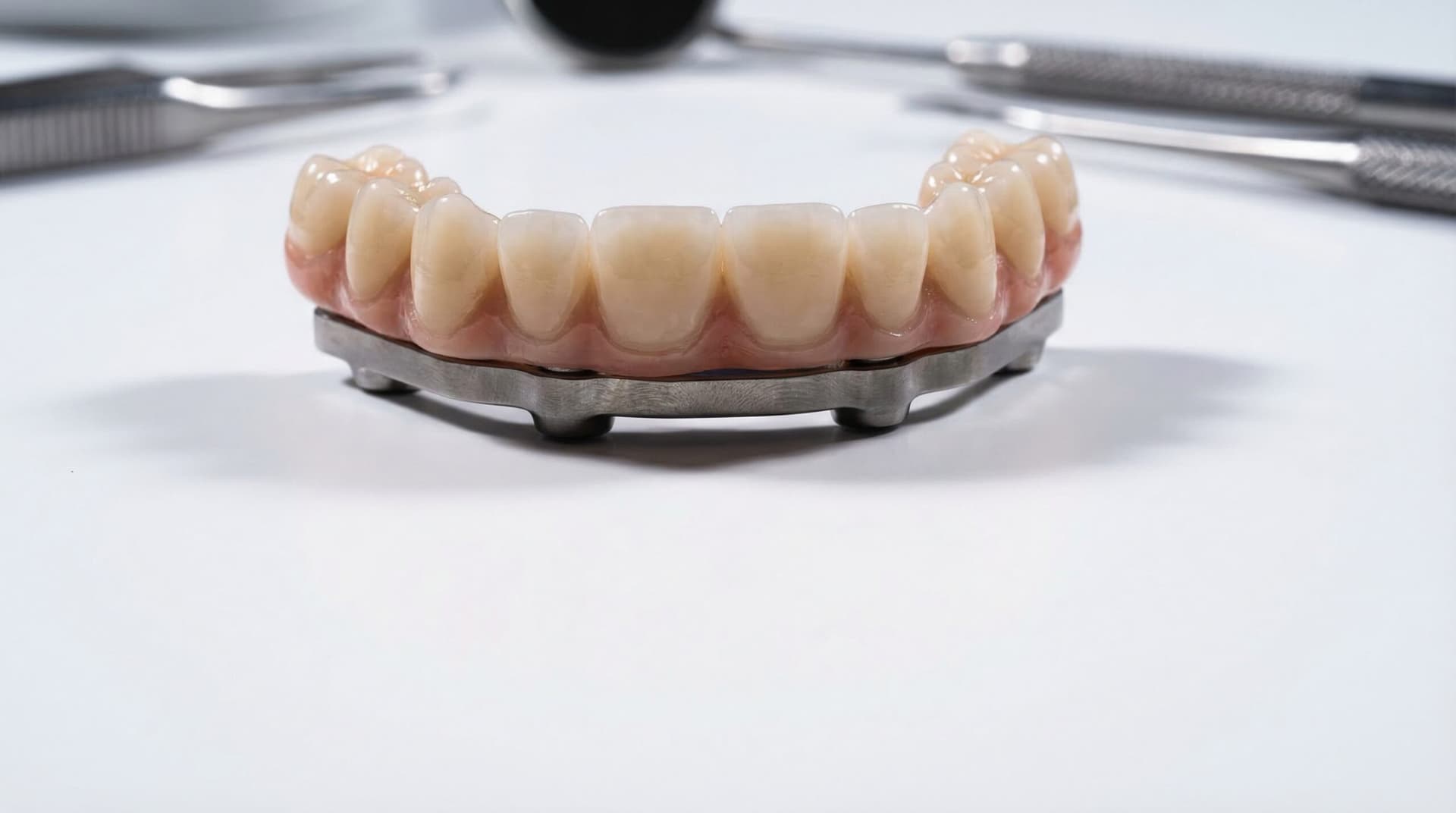 Starts at $20,000 / arch
All-on-6 · Permanent Teeth in a Day
Walk in. Walk out smiling. Six implants, not four, built to outlast a single failure.
Explore Custom pricing
Cosmetic Dentistry
Whitening, smile design, makeover. 1,000+ smiles transformed.
Explore From $1,800 / tooth
Veneers
Fix your smile in two visits. Digital smile preview.
Explore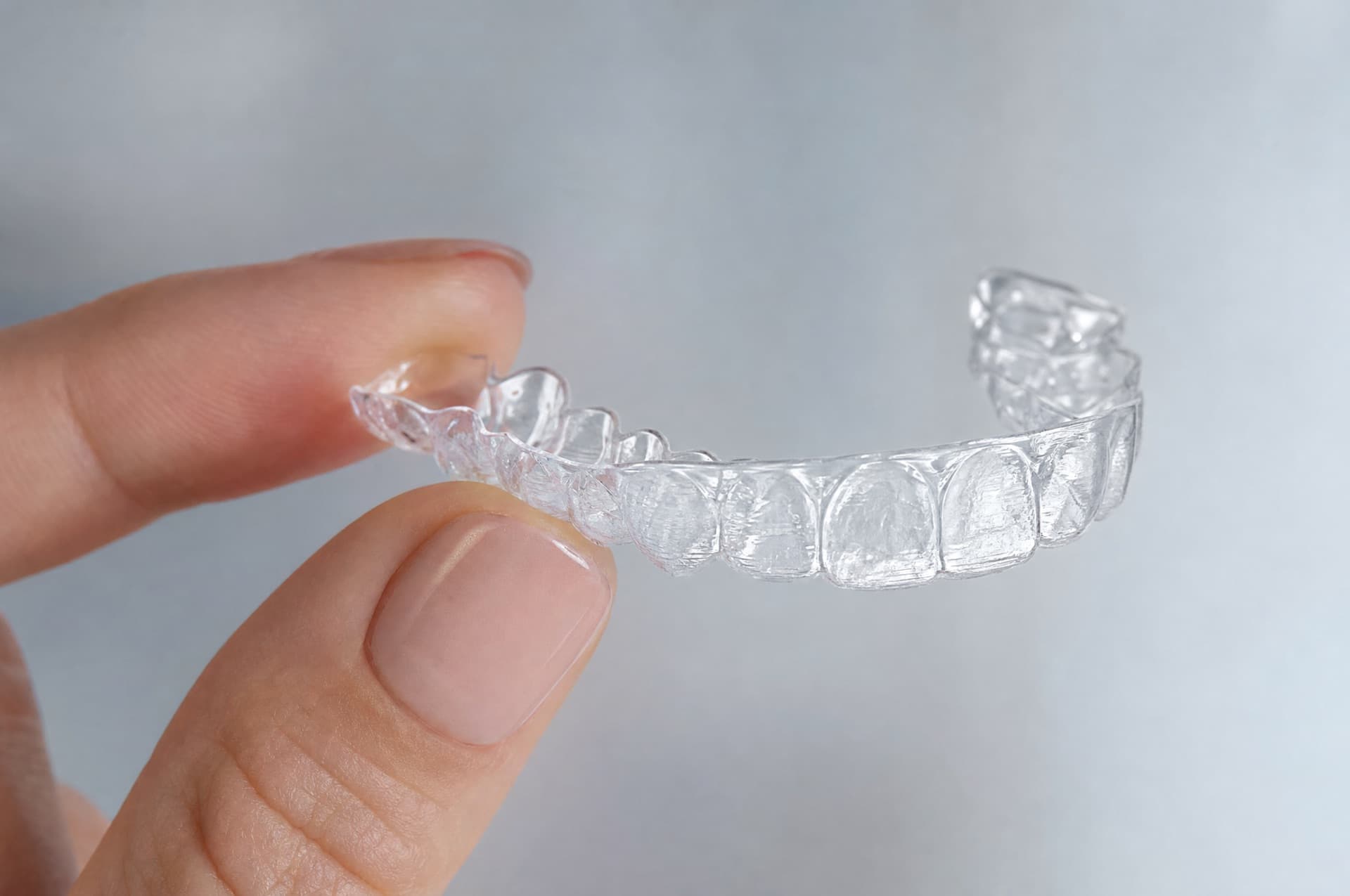 From $4,500
Invisalign
Straight teeth in 6–18 months. Nobody has to know.
Explore

Your Implant Dentist
The doctor in the room is the one who does everything.
When you book a consult, you're not meeting a sales coordinator. You're meeting me. I'll personally read your CBCT, draft your treatment plan, and quote your exact price, start to finish.
Dr. Henry Qiu, DDS
UCLA Trained · DIO Implant Faculty & Instructor
References
- Hard vs. Soft Credit Inquiries. Consumer Financial Protection Bureau.
- Medical Credit Cards and Financing Plans. Consumer Financial Protection Bureau.
- Implants. American Dental Association (MouthHealthy).
- Dental Care Market. American Dental Association, Health Policy Institute.
- Drilling Down on Dental Coverage and Costs for Medicare Beneficiaries. KFF (Kaiser Family Foundation).
- Long-term (10-year) dental implant survival: A systematic review and sensitivity meta-analysis.. PubMed (NIH).
Written by Dr. Henry Qiu, DDS. Sources are peer-reviewed studies and recognized health authorities.